Daniel’s Story - From There to Here
Photo by Hussam Alshrif on Unsplash
I was born in Saudi Arabia, grew up mostly in Germany, and hold an American passport. I am, in some ways, a mix of cultures and stories myself — and maybe that is why a website like Mehman’s Table made sense to me. I wanted to understand better the world I live in. And I wanted to help others do the same.
I studied that instinct formally at university, where I also met my wife. We both studied cross-cultural understanding, and we both knew early on that we wanted to live in other countries, work among other cultures, and do it in a way that actually meant something — especially for people in vulnerable situations.
We were close to making that happen when Covid shut everything down. We had been connecting with an NGO working with migrants and refugees in Western Europe and were in the process of joining them when the world stopped. So we regrouped. We looked for other options. Turkey was open, and I had been once before and liked it. The more we researched Istanbul, the more we realized how singular a place it is. Napoleon Bonaparte once said that if the earth were a single state, Istanbul would be its capital. Once we arrived, we understood why.
The city is genuinely unlike anywhere I have ever been. Within months of arriving we had met people from Syria, Uzbekistan, Afghanistan, Kyrgyzstan, across Africa, South America, and Europe. It felt like every people group on earth had found its way here.
The deeper I got into learning Turkish, the more I discovered the broader world of Turkic peoples — a vast and ancient network of cultures stretching from modern Turkey across Central Asia and beyond. Uzbeks, Turkmen, Kazakhs, Kyrgyz, Uyghurs, Tatars, Azerbaijanis. A rich, layered history that most people in the West know almost nothing about. The more I learned, the more I wanted to share it.
My days here don't look like much from the outside. I study languages and history. I meet people for tea. I share meals. I bring my wife and our two boys — both born here in Istanbul — into communities, not just conversations. I teach English and math and science to kids who can't access school for various reasons. Mostly, I listen. I hear stories. I try to understand.
Mehman’s Table is where those stories live.
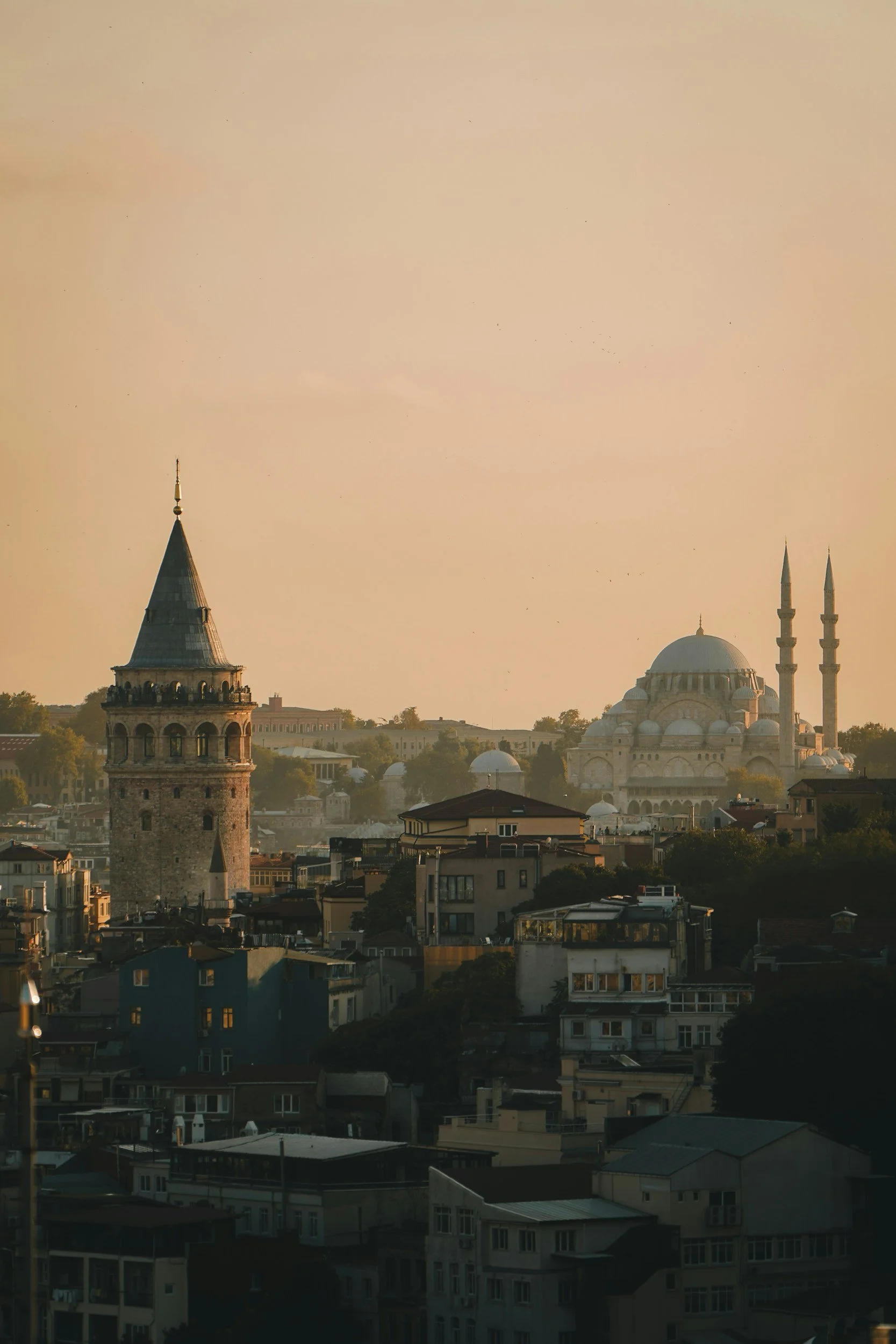
Photo by Kevin Charit on Unsplash
I want to be honest about what this is and what it isn't. I am not an expert. I am a foreigner living in a city that is not mine, learning languages that are not my own, trying to earn the trust of communities that have every reason to be cautious with outsiders. I am still learning. I get things wrong. But I am here, and I am paying attention, and I believe the stories coming out of this part of the world deserve to be told.
I also want to be clear that my voice is not the only one here. Mehman’s Table is built around multiple perspectives — including, eventually, the voices of the people whose stories we are telling. That matters to me.
What I hope you take away is simple. The people you will read about here are, in many ways, very different from you. Their history, their culture, their language, their experience of the world — all of it shaped by circumstances most of us will never face. But underneath all of that, there is a lot we share. People here want meaning and purpose. They want a good life. They want their children to be educated and safe and to have a future worth living into.
Through my travels and studies I have spent time diving deeper into the Abrahamic religions, especially Islam and Christianity. I’ve studied both and received a Masters degree in them. I have a deep respect for how religion shapes culture and how it impacts our stories. One thing I’ve come to see and shapes how I see people is the concept of Imago Dei — the belief that every human being is made in the image of God and carries inherent dignity and purpose. That is not something I impose on the stories here. It is simply the lens through which I see the people I am getting to know.
Welcome to Mehman’s Table. Pull up a chair. There is a lot to learn.